Huihai
Electric
7 Reasons Dry-Type Transformers Are Replacing Oil-Filled Units in 2026 Smart Grid Projects
Discover 7 key reasons why dry-type transformers are the preferred choice for smart grid infrastructure in 2026—from fire safety and zero oil leaks to IoT-enabled monitoring and predictive maintenance capabilities.
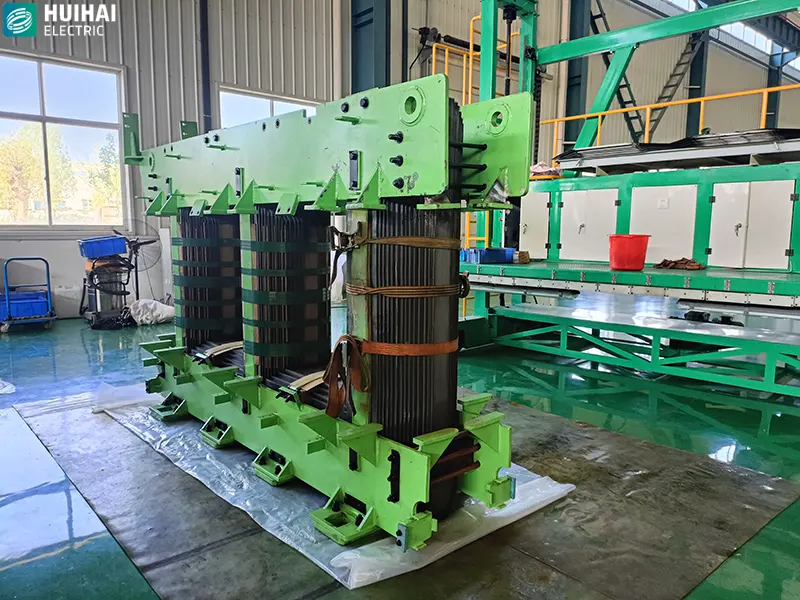
The global power industry is at an inflection point. As smart grid investments surge and renewable energy integration accelerates, a quiet but profound shift is taking place in electrical infrastructure: dry-type transformers are rapidly replacing oil-filled units in projects worldwide.
The numbers tell the story. The global dry-type transformer market is projected to grow from USD 11.72 billion in 2025 to USD 16.33 billion by 2030, at a compound annual growth rate (CAGR) of 6.9%. This growth is driven by increasing demand for resilient, safe, and low-maintenance electrical infrastructure, aligned with smart grid transformation and the decentralization of energy systems.
But what exactly is driving this transition? Here are seven compelling reasons why dry-type transformers are becoming the default choice for smart grid projects in 2026.
Reason 1: Superior Fire Safety — Eliminating the Greatest Risk
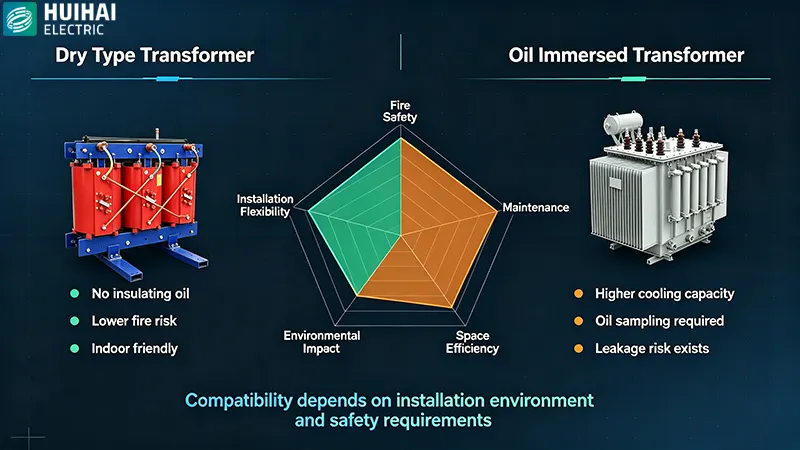
The most immediate and compelling advantage of dry-type transformers is their inherent fire safety. Unlike oil-filled units that rely on flammable mineral oil for insulation and cooling, dry-type transformers use air, cast resin, or solid insulation materials.
All dry-type transformer components are in solid form; they do not have flash points, nor do they require bushings. Thus, major causes of fire and spillage are eliminated. With no flammable liquids involved, dry-type transformers significantly reduce fire hazards—the lack of oil means there is no risk of oil ignition, which is a common concern with oil-filled transformers.
This safety advantage is particularly critical for:
- Indoor installations in high-rise buildings, hospitals, and data centers
- Underground substations in dense urban environments
- Mission-critical facilities where fire risk is unacceptable
In fact, dry-type transformers are now dominating underground grids in 2026 due to their superior fire safety, compact design, and reliability in harsh environments. Utilities are increasingly specifying dry-type units in wildfire-prone regions, and regulators are accelerating adoption through stringent wildfire-mitigation mandates.
Reason 2: Zero Environmental Contamination Risk
Environmental sustainability is no longer a "nice-to-have"—it is a regulatory and operational imperative. Dry-type transformers are inherently eco-friendly due to their oil-free design.
The absence of oil eliminates the risk of oil leaks, which can be hazardous to the environment. Traditional oil-filled transformers pose a constant threat of soil and groundwater contamination from leaks or spills. Dry-type transformers remove this risk entirely, contributing to a reduction in the carbon footprint of an installation and aligning with green building practices and sustainable energy solutions.
This environmental advantage translates into:
- Regulatory compliance with increasingly stringent environmental standards
- Elimination of oil handling and disposal costs
- Support for ESG (Environmental, Social, and Governance) goals
- Qualification for green building certifications like LEED and BREEAM
As environmental regulations tighten worldwide, the mandate to replace oil-filled transformers with eco-friendly alternatives is becoming a primary market driver.
Reason 3: Dramatically Lower Maintenance Requirements
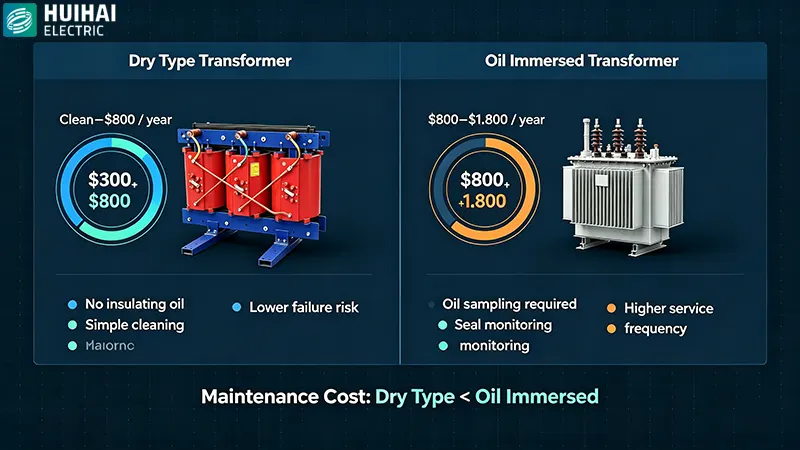
Oil-filled transformers demand regular, costly maintenance—oil quality testing, oil replacement, breather servicing, and leak checks. Dry-type transformers, by contrast, require minimal maintenance because they eliminate the need for insulating oil maintenance entirely.
While dry-type transformers typically have a higher upfront cost, they offer a lower total cost of ownership (TCO). The maintenance cost comparison is stark:
| Maintenance Metric | Dry-Type | Oil-Filled |
| Oil Monitoring | Not required | Required |
| Oil Testing | Not required | Regular |
| Oil Replacement | Not required | Periodic |
| Leak Checks | Not required | Regular |
The dry-type design doesn't need oil-related maintenance, which helps lower maintenance costs significantly. This is particularly valuable for utilities and industrial operators seeking to reduce operational expenses and reallocate resources toward grid automation and digital monitoring.
Reason 4: Smart Grid Readiness — IoT and Real-Time Monitoring
The smart grid is built on data. Modern dry-type transformers are increasingly fitted with sensors, communication modules, and IoT-based diagnostics that enable real-time condition monitoring and fault prediction.
Manufacturers are transitioning toward digitalized units integrated with IoT-based smart monitoring systems, allowing for real-time thermal assessment and predictive maintenance. These systems typically integrate multiple layers of diagnostic technologies, including online temperature monitoring.
Key smart capabilities include:
- Real-time temperature monitoring of windings and core
- Remote communication with grid control centers
- Predictive maintenance alerts based on data analytics
- Integration with SCADA and cloud-based asset management platforms
The role of dry-type transformers in modern power systems is evolving from simple voltage conversion equipment into critical energy conversion nodes. As digital grid and distributed energy integration accelerate across regions, the smart transformers market—of which dry-type units are a key component—is expected to surpass USD 8.17 billion by 2032.
Reason 5: Predictive Maintenance — AI-Driven Asset Management
Data alone is not enough—it must be converted into actionable intelligence. By applying machine learning algorithms to monitoring data, dry-type transformers become predictive assets capable of forecasting failures before they occur.
AI-driven diagnostic systems for transformers have demonstrated diagnostic accuracy higher than 91% with a mean squared error of less than 0.02. These models are useful in detecting faults early, minimizing downtimes, and prolonging transformer life—capabilities that play a major role in smart grid resilience.
The benefits of predictive maintenance for dry-type transformers include:
- Early fault detection before equipment failure
- Reduced unplanned downtime
- Extended asset service life
- Optimized maintenance scheduling
- Lower overall lifecycle costs
As utilities place greater emphasis on predictive maintenance and lifecycle cost optimization, automation-ready, sensor-enabled dry-type transformers are becoming the preferred choice for grid resilience and operational efficiency.
Reason 6: Compact Footprint for Space-Constrained Urban Environments
Urbanization is accelerating, and available space for electrical infrastructure is shrinking. Dry-type transformers offer a compact footprint that makes them ideal for installations where space is at a premium.
Their smaller form factor and fire-safe characteristics make them particularly suitable for:
- High-rise buildings with limited electrical rooms
- Underground substations in dense city centers
- Data centers where every square meter counts
- Industrial facilities with constrained layouts
Pad-mounted configurations can cut installation costs by 15-20% because they eliminate oil-containment vaults. This space efficiency, combined with the elimination of fire-resistant enclosures required for oil-filled units, makes dry-type transformers the preferred choice for urban smart grid projects.
As the global momentum toward smart cities and electric vehicle charging infrastructure accelerates, demand for high-performance, compact medium-voltage transformers continues to surge.
Reason 7: Renewable Energy Integration Capability
Perhaps the most forward-looking reason for the shift to dry-type transformers is their critical role in renewable energy integration. The expansion of renewable energy infrastructure—solar, wind, and hydropower—is anticipated to boost the growth of the dry-type transformer market significantly in the coming years.
Dry-type transformers play a key role in supporting renewable energy systems by enabling the safe and efficient integration of wind and solar power into the grid, offering low maintenance, minimal fire risk, and improved environmental sustainability.
Specialized cast-resin dry-type transformers are engineered specifically for wind power, photovoltaic generation, and energy storage systems, serving as core power conversion equipment that addresses voltage adaptation challenges and ensures safe, reliable power transmission.
Key renewable energy applications include:
- Solar photovoltaic (PV) farms — handling variable DC-to-AC conversion
- Wind power generation — withstanding harsh offshore and onshore conditions
- Battery energy storage systems (BESS) — managing cyclical charge-discharge regimes
- EV charging infrastructure — handling fluctuating loads
The use of dry-type transformers is increasing rapidly with the integration of large numbers of renewable energy sources within the power grid. Global renewable capacity additions are forecast to create cumulative step-up demand of 2 TW by 2050, ensuring sustained demand for dry-type transformer technology.
The Market Reality: A Transformative Shift
The seven reasons above are not theoretical—they are driving real market transformation. Half of North America's distribution-transformer fleet now exceeds 33 years in service, driving a replacement wave that favors dry-type units. Utilities are pairing transformers with battery storage and solar inverters, demanding designs capable of handling harmonic-rich loads.
The dry-type transformer landscape is shifting from a product replacement market to a strategic infrastructure market. Utilities, commercial developers, and industrial operators are recognizing that dry-type transformers are not just safer and greener—they are smarter, more cost-effective over the long term, and better aligned with the digital future of energy.
Huihai Electric: Your Partner in the Smart Grid Transition
At Huihai Electric, we understand the critical role that dry-type transformers play in modern power infrastructure. Our dry-type transformer portfolio is engineered to deliver exceptional reliability, efficiency, and safety across industrial, commercial, and utility applications.
With advanced manufacturing capabilities and rigorous quality control, we provide transformers that meet international standards and perform reliably in the most demanding environments—from urban substations and data centers to solar farms and wind projects.
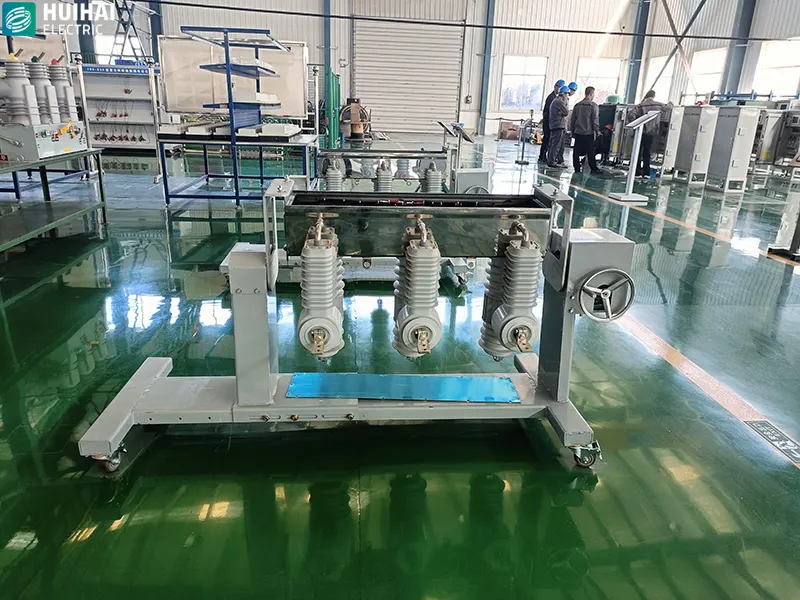
As the world continues its transition toward sustainable energy systems, Huihai Electric is committed to being your trusted partner for high-quality dry-type transformer solutions that meet the challenges of today and tomorrow.
Ready to learn more about Huihai Electric's dry-type transformer solutions? Contact our team to discuss your project requirements or request technical documentation.
Written by
Huihai Electric Co., Ltd.
Editor Xu
www.huihai-electric.com
WhatsApp:+86 139 1136 0187
Email:info@huihai-electric.com
- Five Core Advantages of Huihai Electric High-Voltage Switchgear
- The 8 Key Roles of Temperature and Humidity Controllers in High and Low Voltage Switchgear
- The 9 Core Roles of Huihai Electric Prefabricated Substations in Photovoltaic Power Generation Systems
- Specific Requirements for Prefabricated Substations in Wind Power Generation Systems
HUIHAIElectric
Huihai Electric is a leading manufacturer of smart grid equipment in China.