Huihai
Electric
6 Advantages of Prefabricated Substations Over Traditional Stick-Built Designs
Discover 6 key advantages of prefabricated substations over traditional stick-built designs—including 70% faster deployment, 20–30% cost savings, and smart grid-ready capabilities for utility and renewable energy projects.
The way we build power infrastructure is changing—and fast. For decades, substation construction followed a familiar pattern: procure components, pour concrete, erect buildings, install equipment on-site, and commission over many months. But in an era defined by accelerating energy demand, renewable integration, and urban space constraints, this traditional "stick-built" approach is increasingly impractical.
Enter the prefabricated substation—a factory-assembled, modular power distribution solution that is transforming how utilities, EPC contractors, and industrial developers deploy electrical infrastructure.
The global box-type substation market was valued at USD 19.16 billion in 2025 and is projected to reach USD 32.00 billion by 2032, registering a CAGR of 7.59%. The containerised substation market alone is expected to grow from USD 3.2 billion in 2025 to USD 7.2 billion by 2035 at a CAGR of 8.5%.
What's driving this rapid adoption? Here are six key advantages that make prefabricated substations the preferred choice over traditional stick-built designs.
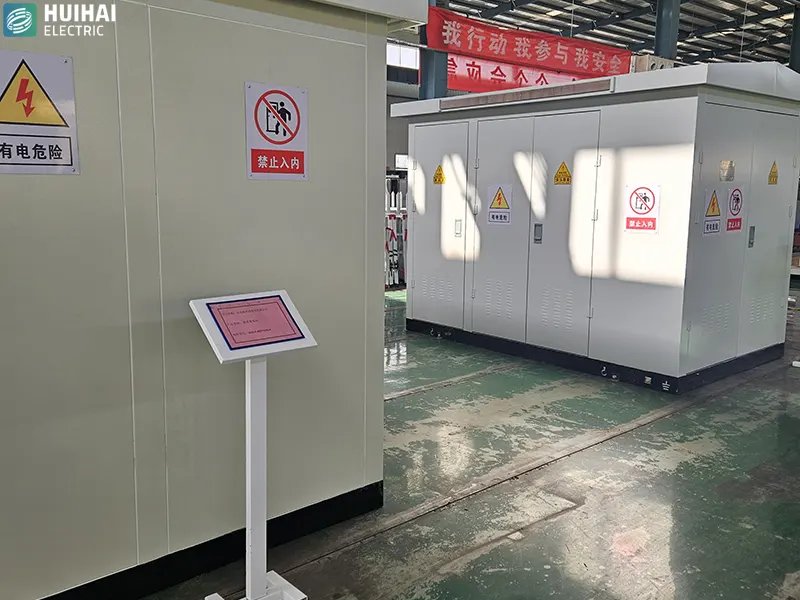
Advantage 1: Dramatically Faster Deployment — Up to 70% Reduction in Construction Time
Time is money in power infrastructure projects. Traditional substations typically require 12 to 18 months to build from groundbreaking to energization. Prefabricated substations slash this timeline dramatically.
By moving the majority of construction, assembly, and testing to a controlled factory environment, prefabricated solutions enable parallel workflows—civil works can proceed on-site while the electrical systems are being built and tested off-site. When the prefabricated units arrive, installation is rapid and straightforward.
Real-world impact: A new generation of prefabricated substations has demonstrated the ability to be completed in as little as five months—reducing construction time by nearly 70%. China's first modular 500 kV substation reduced its construction timeline by four months compared to traditional methods.
For project owners, this means faster revenue generation, earlier grid connection, and reduced exposure to construction-related risks.
Advantage 2: Significant Cost Savings — 20–30% Lower Overall Project Costs
While the upfront equipment cost of a prefabricated substation may appear comparable to traditional alternatives, the total cost of ownership (TCO) tells a very different story.
For 90% of urban, industrial, and renewable energy projects (up to 35kV), prefabricated substations offer a 20–30% reduction in overall costs and can cut installation time by up to 70%.
Where the savings come from:
- Minimal civil works: Traditional substations require extensive foundation digging, bricklaying, roofing, and ventilation systems. Prefabricated units need only a simple concrete plinth with cable trenches—reducing civil engineering expenses by over 80%.
- Reduced land acquisition costs: Traditional substations occupy 3–5 times more land area than prefabricated units due to spacing requirements between equipment and maintenance corridors. In urban centers where real estate is at a premium, this is a game-changer.
- Predictable labor costs: Factory integration means labor costs are fixed and predictable, eliminating the variables of on-site construction delays, weather disruptions, and labor shortages.
- Lower project costs overall: Compared with conventional power facilities, prefabricated solutions can lower overall project costs by approximately 20%.
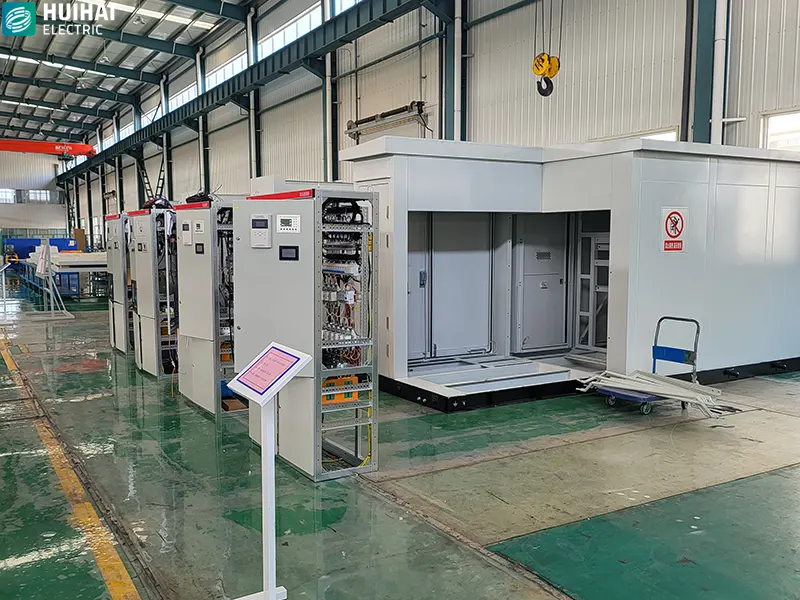
Advantage 3: Compact Footprint — Space Savings of 30% or More
Urban densification and land scarcity are making space a critical constraint for new power infrastructure. Prefabricated substations address this challenge directly with their compact, space-efficient design.
The modular nature of prefabricated substations allows for dense integration of transformers, switchgear, control systems, and protection equipment into a single, enclosed unit. The result is a footprint that is significantly smaller than traditional stick-built designs.
Real-world impact: Compared with conventional power facilities, prefabricated solutions reduce land use by more than 30%. Some advanced modular high-voltage substation solutions are more than 10× more compact than conventional systems, reducing space requirements by 80–90%.
This space efficiency makes prefabricated substations ideal for:
- Urban substations where land is scarce and expensive
- Rooftop and indoor installations in commercial buildings
- Industrial facilities with limited available footprint
- Renewable energy projects in environmentally sensitive areas
Advantage 4: Superior Quality Control Through Factory-Based Production
Traditional stick-built substations are subject to the vagaries of on-site construction—weather delays, variable workmanship, material storage issues, and the inherent challenges of assembling complex electrical systems in the field.
Prefabricated substations invert this model. By manufacturing and assembling components in controlled factory environments, the approach ensures superior quality control through factory-based production, mitigating potential on-site construction defects.
Key quality advantages:
- Standardised and repeatable designs that can be refined and optimised over multiple projects
- Factory pre-testing of all systems before shipment, reducing commissioning surprises
- Consistent workmanship weather, site conditions, or variable labor skills
- Reduced on-site commissioning time because systems arrive pre-validated
The result is higher reliability, fewer start-up issues, and a more predictable energization schedule.
Advantage 5: Enhanced Safety and Reduced Environmental Impact
Substation construction and operation present inherent safety risks. Prefabricated solutions significantly reduce these risks while delivering meaningful environmental benefits.
Safety improvements:
- Reduced on-site work: With most assembly completed in the factory, workers spend less time in hazardous substation environments. This reduces elevated work risks by up to 50%.
- Shorter site exposure: Reduced construction timelines mean less time that workers and the public are exposed to construction-related hazards.
- Controlled manufacturing environment: Factory production is inherently safer than on-site construction, with better safety protocols and equipment.
Environmental benefits:
- Reduced carbon emissions: Prefabricated concrete structures can achieve an 11.37% reduction in carbon emissions compared to traditional cast-in-place reinforced concrete and a 26.54% reduction compared to steel structures in terms of building materials.
- Minimised site disruption: With wet works substantially reduced at construction sites, on-site working conditions are improved and environmental impact is minimised.
- Reduced dust and pollution: Modular construction cuts dust emissions and supports environmental sustainability goals.
- Less disruption for local communities: Smaller site footprints and shorter construction periods mean less noise, traffic, and general disturbance.
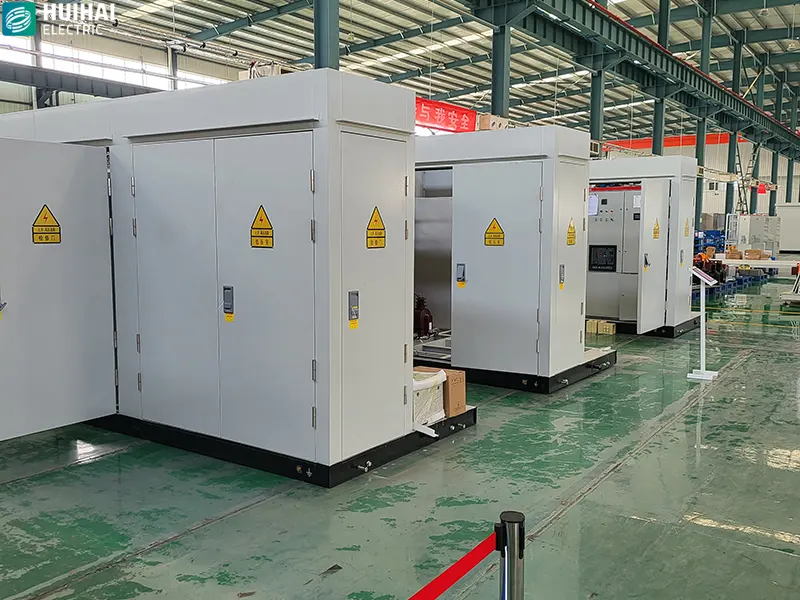
Advantage 6: Smart Grid Ready — Integrated Monitoring and Remote Control
The modern grid is digital, and prefabricated substations are designed for this reality. Unlike traditional stick-built designs that often require retrofitting for smart capabilities, prefabricated substations can integrate smart monitoring, control, and communication systems from the factory floor.
Major trends in the prefabricated substation market include growing integration of smart monitoring and protection systems, enabling remote control and seamless integration with SCADA systems.
Smart capabilities of modern prefabricated substations:
- Remote monitoring and control: Operators can monitor substation performance, identify issues, and even perform network management from anywhere.
- Predictive maintenance: When connected through sensors, smart meters, protection relays, and SCADA systems, machine-learning models can identify early warning signals such as abnormal temperature rise, load imbalance, insulation degradation, harmonic distortion, or breaker operation patterns.
- IoT integration: Sensors and communication modules enable real-time thermal assessment and condition monitoring.
- SCADA compatibility: Prefabricated substations are designed for seamless integration with utility control systems.
For utilities and operators, this means improved grid visibility, reduced outage durations, lower maintenance costs, and the ability to participate in increasingly complex grid management strategies.
The Market Reality: A Transformative Shift
The advantages outlined above are not theoretical—they are driving real market transformation across the globe:
- China leads with 11.5% CAGR in containerised substation adoption, powered by industrial electrification, large-scale renewable integration, and state-led smart grid upgrades.
- India follows at 10.7% CAGR, with strong adoption in solar parks, metro systems, and industrial corridors.
- Germany (9.8% CAGR) is leveraging containerised substations for wind farms, EV charging infrastructure, and data centers.
- The United Kingdom (8.1% CAGR) is expanding adoption in offshore wind projects and temporary substations for urban grid upgrades.
SSEN Transmission, a major UK network operator, is actively rolling out modular substations, stating: "By doing more of the work off-site, we can improve safety, shorten construction times and significantly reduce the environmental impact of construction".
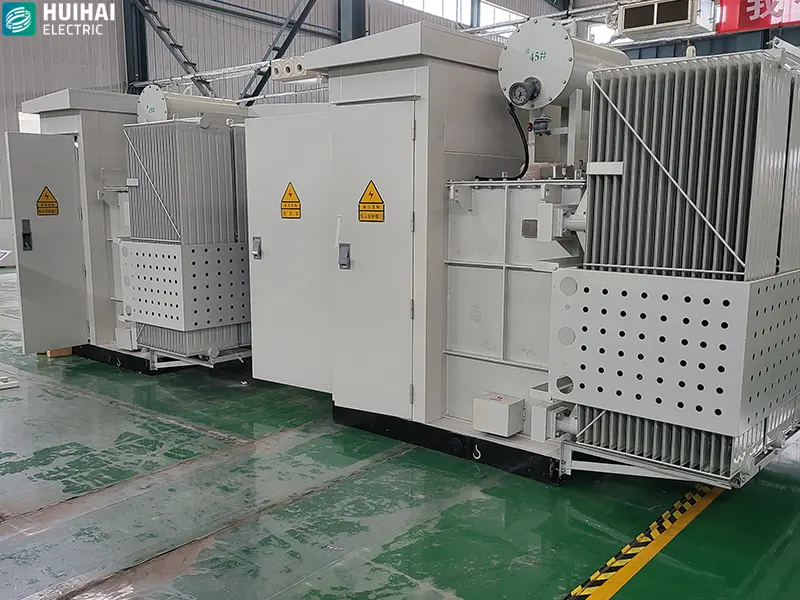
Huihai Electric: Your Partner in Prefabricated Substation Solutions
At Huihai Electric, we understand that the choice between traditional and prefabricated substations is not just about equipment—it's about project success, timeline certainty, and long-term operational efficiency.
Our prefabricated substation solutions are engineered to deliver all six advantages outlined above:
- Rapid deployment with factory-preassembled, pre-tested units
- 20–30% cost savings through reduced civil works and predictable labor
- Compact footprint ideal for space-constrained urban and industrial sites
- Superior quality through factory-based manufacturing and testing
- Enhanced safety with minimal on-site work and shorter construction windows
- Smart grid-ready with integrated monitoring and SCADA compatibility
Whether you are upgrading an urban distribution network, expanding renewable energy capacity, or developing new industrial infrastructure, Huihai Electric delivers reliable, high-performance prefabricated substation solutions backed by years of industry expertise.
Written by
Huihai Electric Co., Ltd.
Editor Xu
www.huihai-electric.com
WhatsApp:+86 139 1136 0187
Email:info@huihai-electric.com
- The 7 Major Causes of Excessive No-Load Current in Dry-Type Transformers
- Dry-Type Transformers: The Backbone of Modern Smart Grid Infrastructure
- The 9 Key Roles of Dry-Type Transformers in Modern Smart Grid Infrastructure Construction
- High Voltage Switchgear Supplier Evaluation: 6 Critical Quality KPIs for B2B Buyers
HUIHAIElectric
Huihai Electric is a leading manufacturer of smart grid equipment in China.