Huihai
Electric
High Voltage Switchgear Supplier Evaluation: 6 Critical Quality KPIs for B2B Buyers
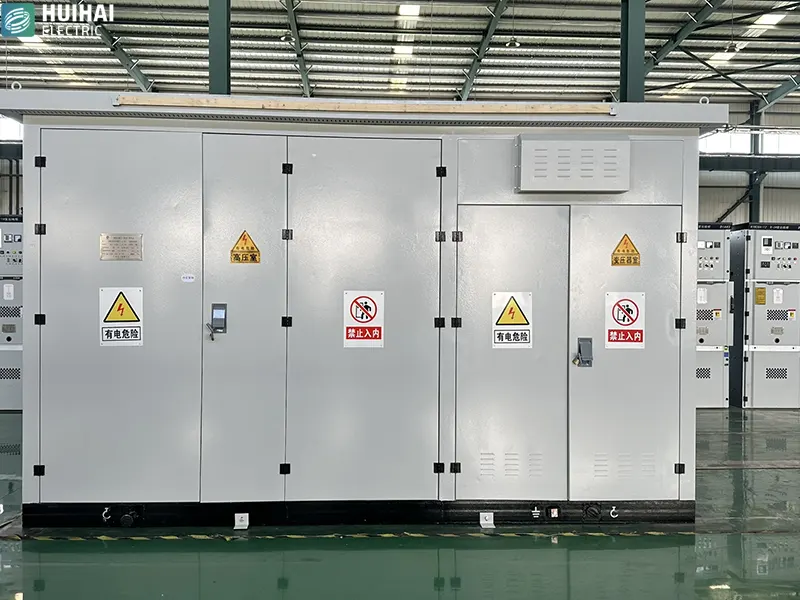
Selecting the right high voltage switchgear supplier is one of the most consequential decisions a B2B procurement team can make. With the global high voltage switchgear market projected to reach USD 12.4 billion in 2026 and growing at a 10.9% CAGR, the number of suppliers—and the quality variance among them—has never been greater.
A poorly chosen switchgear can lead to catastrophic failures, unplanned outages, safety hazards, and millions of dollars in operational losses. Conversely, a well-selected supplier delivers decades of reliable performance, low maintenance costs, and seamless smart grid integration.
But how do procurement managers and project engineers objectively evaluate supplier quality before signing a purchase order?
This article presents 6 critical Key Performance Indicators (KPIs) that every B2B buyer should use to evaluate high voltage switchgear suppliers—from technical compliance to after-sales support.
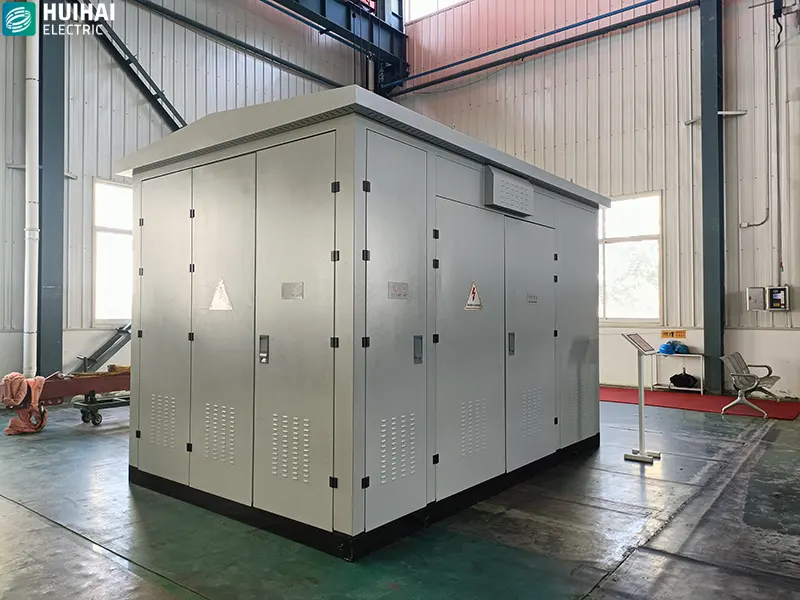
KPI 1: Technical Compliance and International Standards Certification
The foundation of any high-quality switchgear is compliance with internationally recognized standards. This is non-negotiable.
What to Verify
- IEC 62271 series (international standard for high-voltage switchgear and controlgear)
- IEEE C37 series (North American standard for switchgear)
- GB 3906 / GB/T 11022 (Chinese national standards)
- ISO 9001 (quality management system)
- ISO 14001 (environmental management)
Why It Matters
Compliance ensures that the switchgear meets minimum safety, performance, and environmental requirements. Without these certifications, you expose your project to regulatory non-compliance, safety risks, and potential legal liabilities.
Red Flags
- Supplier hesitates to provide test reports or certification copies
- Certifications are expired or from non-accredited bodies
- Products claim "equivalent to" standards without formal certification
- Rated voltage (e.g., 12kV, 24kV, 36kV, up to 550kV)
- Rated short-circuit withstand current (kA) for 1 second or 3 seconds
- Rated peak withstand current (kA)
- Rated short-circuit making current (kA)
- Short-circuit test reports from independent labs (e.g., KEMA, CESI, or local equivalents)
- Calculated dynamic and thermal stress values for your specific fault current level
- Documentation of the withstand capability at both rated and extreme conditions
- Rated insulation level (power frequency withstand voltage and lightning impulse withstand voltage)
- Partial discharge level (measured in picocoulombs, pC) at rated voltage
- Insulation medium type (SF6 gas, vacuum, solid insulation, or SF6-alternative gases)
- Temperature rise limits per IEC 62271-1 (e.g., maximum 65°C rise for copper connections)
- Ambient temperature rating (typically -25°C to +40°C for indoor, -40°C to +55°C for outdoor)
- Cooling method (natural air, forced air, or gas cooling)
- Review temperature rise test reports
- Compare actual test results against the IEC limits
- Check for derating requirements if your installation ambient temperature exceeds standard conditions
- Mechanical endurance class (M1, M2 per IEC 62271-100). M1: 1,000–2,000 operations, M2: 10,000+ operations
- Electrical endurance (E1, E2 for circuit-breaker interruption capability)
- Operating mechanism type (spring, hydraulic, magnetic, or motor-driven)
- For critical substations, specify M2 (10,000 operations) mechanical endurance
- Require proof of mechanical endurance testing at the factory
- Ask about the supplier's field failure rate for operating mechanisms
- Lead time for spare parts (critical vs. standard items)
- Technical support availability (24/7? Remote? On-site?)
- Training programs for your maintenance team
- Warranty terms and claim processing history
- Local service presence or partner network in your region
- Request references from existing customers in your region
- Ask for a spare parts catalog with lead times
- Review the supplier's warranty claim history and resolution timelines
- Inquire about their inventory policy for critical parts
- Compliance: Full IEC 62271 and IEEE C37 certification with type tests from independent laboratories
- Withstand Capability: Switchgear rated up to 550kV with short-circuit withstand tested to the highest levels
- Insulation Excellence: Guaranteed PD levels ≤ 5 pC at 1.1× rated voltage
- Thermal Performance: Conservative temperature rise designs with ample safety margins
- Mechanical Reliability: M2 class (10,000+ operations) for circuit-breaker mechanisms
- Global Support: Dedicated service teams and spare parts inventory for rapid response
Questions to Ask Suppliers
Can you provide type test reports from independent, accredited laboratories for the specific voltage and current ratings we require?
KPI 2: Rated Voltage and Short-Circuit Withstand Capability
Switchgear must be designed to handle both normal operating conditions and extreme fault scenarios. This KPI evaluates whether the equipment can survive and protect the system during short-circuit events.
What to Verify
Why It Matters
During a fault, the switchgear must withstand enormous electromagnetic forces and thermal stress. Under-specified equipment can explode or fail catastrophically, endangering personnel and damaging connected equipment.
How to Evaluate
Ask for:
Questions to Ask Suppliers
What is the short-circuit withstand capacity of your switchgear at our project's maximum fault current level? Can you provide the test certificate?
KPI 3: Insulation Performance and Partial Discharge Level
Insulation integrity is the single most important factor determining a switchgear's service life and reliability. Partial discharge (PD) level is the gold-standard metric for assessing insulation quality.
What to Verify
Industry Benchmarks
| Voltage Level | Acceptable PD Level (pC) | Excellent PD Level (pC) |
| ≤ 12kV | ≤ 10 pC | ≤ 5 pC |
| 24-36kV | ≤ 10 pC | ≤ 5 pC |
| ≥ 72.5kV | ≤ 10 pC | ≤ 5 pC |
Why It Matters
High PD levels indicate insulation defects—micro-cracks, voids, or contamination—that will worsen over time. What starts as a small PD reading can escalate into a full insulation breakdown within months or years.
Questions to Ask Suppliers
What is the guaranteed partial discharge level for your switchgear at 1.1× rated voltage? Can you provide PD test reports for the specific unit we are purchasing?
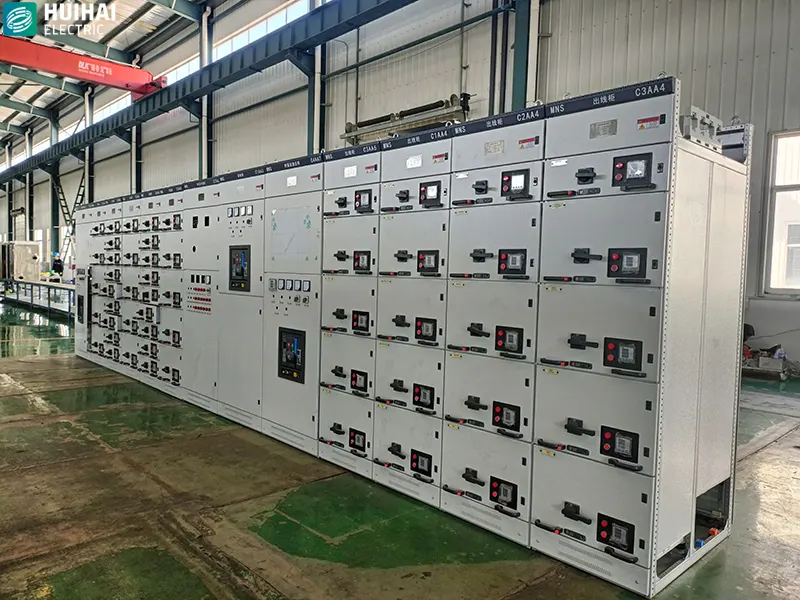
KPI 4: Temperature Rise and Thermal Performance
Switchgear generates heat during normal operation. Excessive temperature rise accelerates insulation aging, increases resistance, and can lead to premature failure.
What to Verify
Why It Matters
Every 10°C increase above rated temperature can halve the insulation life. Suppliers who skimp on conductor cross-sections or use inferior materials often fail temperature rise tests—or pass them by the narrowest margin, leaving no safety margin.
How to Evaluate
Questions to Ask Suppliers
What is the actual temperature rise of your switchgear at full rated current? Is there any derating required for our site's ambient temperature?
KPI 5: Mechanical Endurance and Operational Reliability
Switchgear must perform reliably over thousands of mechanical operations—opening and closing under both normal and fault conditions.
What to Verify
Why It Matters
High-voltage switchgear is not a "set and forget" asset. Circuit breakers must operate reliably during infrequent but critical fault events. A stuck mechanism or failed spring can mean the difference between a contained fault and a widespread outage.
Industry Best Practices
Questions to Ask Suppliers
What is the mechanical endurance rating of your circuit-breaker operating mechanism? Can you provide test data showing performance beyond the rated cycle count?
KPI 6: After-Sales Support and Spare Parts Availability
Even the highest-quality switchgear will require maintenance, repairs, and eventually, spare parts. A supplier's after-sales capability is as important as the product itself.
What to Evaluate
Why It Matters
When a switchgear fails, every hour of downtime costs money—sometimes millions of dollars. If your supplier takes weeks to deliver a replacement part or cannot dispatch a field engineer promptly, your recovery time extends dramatically.
How to Evaluate
Questions to Ask Suppliers
What is your standard lead time for critical spare parts? Do you maintain consignment inventory in our region? What is your typical field support response time?
Putting It All Together: The Supplier Scorecard
To make your evaluation systematic, consider creating a weighted scorecard based on these 6 KPIs:
| KPI | Weight (%) | Score (1-10) | Weighted Score |
| Technical Compliance | 20% | ||
| Short-Circuit Withstand | 20% | ||
| Insulation/PD Performance | 20% | ||
| Temperature Rise | 15% | ||
| Mechanical Endurance | 15% | ||
| After-Sales Support | 10% | ||
| Total | 100% |
Aim for a weighted score of 8.0 or higher before shortlisting any supplier. For critical infrastructure projects, consider setting the threshold at 8.5.
Why Huihai Electric Meets All 6 KPIs
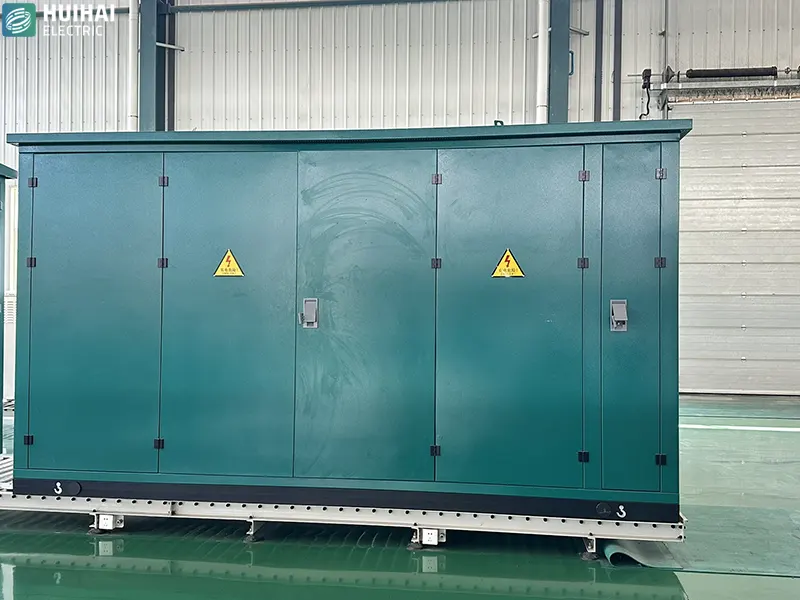
At Huihai Electric, we understand the immense responsibility that comes with manufacturing high voltage switchgear for utility, industrial, and renewable energy projects. Our products are designed and tested to meet the most stringent international standards, and we back every unit with comprehensive after-sales support.
When you partner with Huihai Electric, you're not just buying equipment—you're investing in decades of reliability and a relationship built on trust.
Conclusion
Evaluating high voltage switchgear suppliers requires a structured, data-driven approach. By applying these 6 critical KPIs—technical compliance, short-circuit withstand, insulation performance, temperature rise, mechanical endurance, and after-sales support—you can confidently separate world-class suppliers from those that merely claim to be.
The cost of a wrong decision is measured not just in dollars, but in safety, uptime, and peace of mind. Choose wisely.
Written by
Huihai Electric Co., Ltd.
Editor Xu
www.huihai-electric.com
WhatsApp:+86 139 1136 0187
Email:info@huihai-electric.com
- Specific Requirements for Prefabricated Substations in Wind Power Generation Systems
- 7 Reasons Dry-Type Transformers Are Replacing Oil-Filled Units in 2026 Smart Grid Projects
- 9 Important Considerations for Outdoor Installation of Power Transformers
- Basic Winter Maintenance Measures for Oil-Immersed Transformers
HUIHAIElectric
Huihai Electric is a leading manufacturer of smart grid equipment in China.