Huihai
Electric
7 Key Factors to Consider When Purchasing an Oil-Immersed Transformer
In the planning and construction of power systems, oil-immersed transformers have long held a core position due to their excellent heat dissipation performance, high overload capacity, and relatively economical manufacturing costs. Whether it's the distribution system of industrial and mining enterprises, the step-up stage of new energy power plants, or even the hub stations of urban power grids, selecting a suitable oil-immersed transformer directly affects the safety, reliability, and operational efficiency of the entire power supply system. However, faced with numerous models and products with different parameters on the market, improper selection often leads to wasted initial investment, excessive energy consumption in the later stages, and even hidden safety hazards. Therefore, systematically outlining key considerations at the initial decision-making stage is particularly important. The following seven factors are core points that you must carefully evaluate when purchasing an oil-immersed transformer.
1. What is an Oil-Immersed Transformer?
1.1. Basic Definition
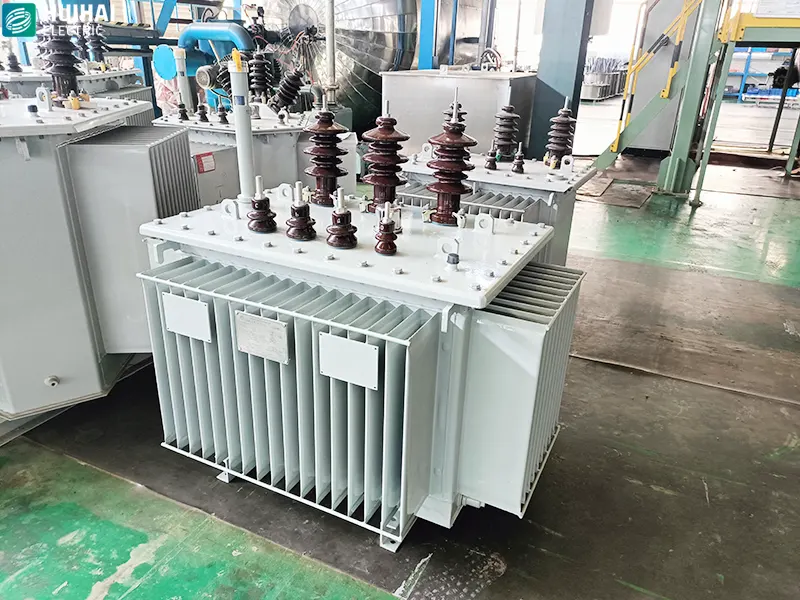
- An oil-immersed transformer is a power transformer that uses insulating oil as the insulation and heat dissipation medium. It is the most mainstream distribution/transformation equipment in industrial and mining enterprises, residential areas, and power grids.
1.2. Core Working Principle
- Transformation: Relying on electromagnetic induction, high-voltage electricity is converted into low-voltage electricity (commonly 10kV→0.4kV) to meet the needs of electrical equipment.
- Insulation: The transformer oil in the tank isolates the windings, core, and casing, preventing short circuits and leakage.
- Heat Dissipation: The coils and core generate heat during operation. The hot oil flows upward, cools after passing through the tank wall/heat sink, and then flows back, circulating to carry away heat and prevent overheating and burnout.
1.3. Main Structure (Simple Disassembly)
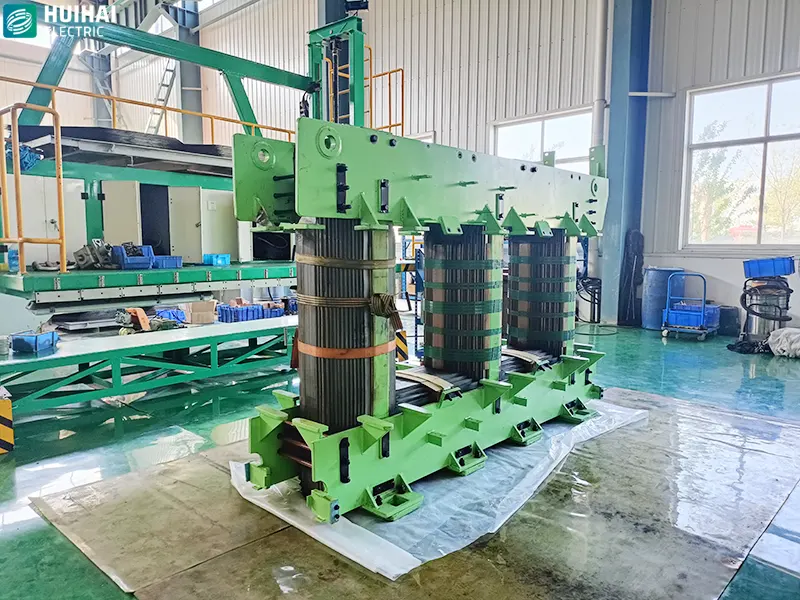
- Core + Windings: Core components of the substation.
- Transformer Oil: Dual function of insulation and heat dissipation.
- Tank, Heat Dissipation Pipes/Flats: Hold oil and assist in heat dissipation.
- Oil Conservator, Breather, Thermometer, Drain Valve: Oil level monitoring, moisture protection, temperature measurement, and maintenance accessories.
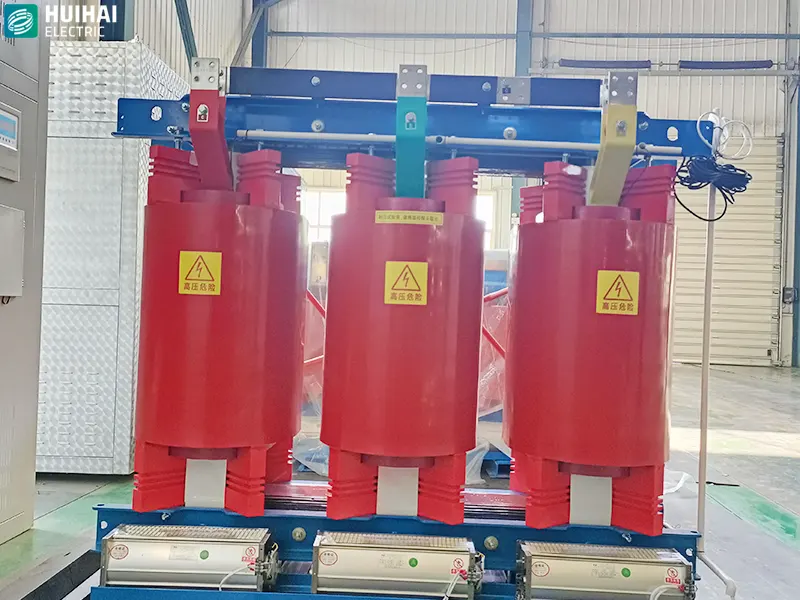
2. Common Types of Oil-Immersed Transformers
2.1. ONAN Oil-Immersed Self-Cooling
- Relies on natural oil convection + tank/heat sink for heat dissipation, without a fan.
- Suitable for: Distribution transformers of 2500kVA and below, outdoor residential areas, factories, and rural power grids; simplest operation and maintenance.
2.2. ONAF Oil-Immersed Air-Cooled Transformer:
- Built-in cooling fan, forced air cooling, improved heat dissipation capacity.
- Suitable for: 2500~10000kVA, heavy-load, high-temperature summer, and large load fluctuation areas.
2.3. OFAF Forced Oil Circulation Air-Cooled Transformer:
- Oil pump + fan dual forced circulation.
- Suitable for: Large main transformers above 10000kVA, main transformers in substations.
3. Seven Core Factors for Selecting Oil-Immersed Transformers
3.1. Rated Capacity (kVA) – Matching Load + Future Expansion Reserve
- Economic Load Factor: 60%–75% (Highest Efficiency, Optimal Lifespan)
- Capacity Calculation: S = P ÷ (cosφ × η), cosφ is 0.8–0.9, η is 0.95–0.98.
- Conventional Margin: 110%–120% (based on calculated values).
- Impact Load (Motors): Additional 30%–50%.
- Future Expansion Reserve: 15%–25%; Up to 30% for industrial parks.
- Commonly Used Standard Capacities: 100, 200, 400, 630, 800, 1000, 1250, 1600, 2000, 2500 kVA.
3.2. Voltage Level and Connection Group – System Matching + Power Supply Quality
- High Voltage Side: 10kV, 35kV, 110kV (deviation allowed ±5%).
- Low Voltage Side: 400V (line)/230V (phase); can be increased by 5% considering line voltage drop.
- Common Connection Groups: Dyn11 (preferred, strong harmonic suppression and unbalanced load capability), Yyn0.
- Voltage Regulation Range: No-load voltage regulation, ±2×2.5% or ±5% (power outage adjustment). On-load voltage regulation, ±8×1.25% (used when load fluctuation > 10%).
3.3. Short-circuit Impedance (Uk%) – Current Limiting + Voltage Stabilization Balance
- Standard for distribution transformers: 4%~6% (stable voltage, relatively large short-circuit current).
- Current limiting scenario: 6%~10% (small short-circuit current, slightly larger voltage fluctuation).
- Typical value for 10kV/0.4kV: 6% (balancing short-circuit current and voltage regulation rate).
- Voltage Regulation: ≤4% under rated load (Dyn11 typically ≤2.5%).
3.4. Losses and Energy Efficiency – Key Factors in Total Lifetime Cost
- No-load Loss (Iron Loss, kW): 1000kVA 10kV≤1.7kW (Level 1 Energy Efficiency), ≤2.0kW (Level 2).
- Load Loss (Copper Loss, kW, 75℃): 1000kVA 10kV≤10.3kW (Level 1), ≤12.2kW (Level 2).
- Energy Efficiency Level: Prioritize Level 1/Level 2 (Annual Energy Savings Can Reach Tens of Thousands of kWh).
- Annual Energy Cost Estimation: (No-load Loss × 8760 + Load Loss × Load Rate² × 8760) × Electricity Price.
3.5. Cooling Method – Heat Dissipation Capacity + Environmental Adaptability
- ONAN (Oil-Immersed Self-Cooling): ≤2500kVA, Ambient Temperature -25℃~+40℃, Altitude ≤1000m, Most Commonly Used, Low Maintenance.
- ONAF (Forced Air Cooling): 2500~10000kVA, automatic fan switching during high summer temperatures or heavy loads.
- OFAF (Forced Oil Circulation Air Cooling): ≥10000kVA, dedicated to large-capacity main transformers.
- High Altitude (>1000m): Capacity derating of 0.3%~0.5% for every 100m increase in altitude.
3.6. Winding Material and Insulation Level—Lifespan + Reliability
- Copper Winding: Low loss, strong short-circuit impact resistance, lifespan 20~30 years, high price.
- Aluminum Winding: Low cost, light weight, slightly higher loss, lifespan 15~20 years.
- Insulation Heat Resistance Class: Class A (105℃) Standard; Class H (180℃) High temperature resistance, longer lifespan.
- Insulation Level: 10kV system lightning impulse withstand voltage 75kV, power frequency withstand voltage 35kV/1min.
3.7. Environmental Adaptability and Protection—Essential for Outdoor/Harsh Scenarios
- Ambient Temperature: Standard -25℃~+40℃; -45℃ low-temperature oil required for extreme cold.
- Humidity: ≤95% (non-condensing).
- Protection Rating: Outdoor IP54 (dustproof, splashproof); Coastal/Chemical Industry IP55 + anti-corrosion coating required.
- Noise: 1000kVA 10kV typically ≤55dB(A); Residential areas low-noise type ≤50dB(A) required.
4. Price Range of Oil-Immersed Transformers
4.1. 10kV Distribution Transformer (11kV/0.4kV, Three-phase, ONAN, All Copper, S13/Level 1 Energy Efficiency)
- 50kVA: $1,200–$2,000
- 100kVA: $1,800–$3,000
- 250kVA: $3,500–$5,500
- 630kVA: $7,000–$12,000
- 1000kVA: $9,000–$18,000
- 1600kVA: $15,000–$25,000
- 2500kVA: $20,000–$35,000
4.2. 35kV Class (35kV/10kV, Three-phase, ONAN/ONAF)
- 2000kVA: $35,000–$60,000
- 5000kVA: $60,000–$100,000
- 10000kVA (10MVA): $90,000–$150,000
4.3. 110kV and Above Main Transformers (110/35kV, OFAF)
- 20MVA: $150,000–$300,000
- 50MVA: $300,000–$600,000
- 110kV/220kV Large Main Transformer: $800,000–$2,000,000+
5. Advantages and Disadvantages of Oil-Immersed Transformers
5.1. Advantages
- Good heat dissipation and strong overload capacity;
- Stable insulation performance and long service life (normally 20-30 years);
- Mature structure, moderate price, and wide capacity coverage;
- Can be directly installed outdoors, suitable for power grids, factories, construction sites, and rural power distribution.
5.2. Disadvantages
- Contains flammable insulating oil; strictly prohibited from use in enclosed, high-risk indoor locations;
- Requires regular inspection of oil level, oil quality, and leakage; requires some maintenance.
6. Abnormal Oil Level in Oil-Immersed Transformers
6.1. Low Oil Level
- Symptoms: Oil level gauge reading is low, below the standard mark.
- Causes: Aging and leakage of the tank/flange/gasket, damaged oil pipes, insufficient oil filling, high-temperature evaporation.
- Solution: Check and repair leaks; add qualified transformer oil of the same type; do not operate under load if severely low oil level is observed.
6.2. High Oil Level
- Symptoms: Oil level exceeds the upper limit, oil temperature is high.
- Causes: Sudden increase in ambient temperature, long-term overload, excessive oil filling.
- Solution: Drain oil to the standard level; check if the load exceeds the limit.
6.3. Oil Leakage
- Symptoms: Oil seepage or dripping from the tank, valves, bushings, and welds.
- Causes: Aging seals, loose bolts, welding defects, transportation vibration.
- Solution: Tighten bolts; replace gaskets; weld leakage requires shutdown and repair welding.
7. Conclusion
When purchasing oil-immersed transformers, it is necessary to comprehensively verify the rated capacity and reserve expansion margin, match the site voltage level, connection group, and voltage regulation method, and rationally select the short-circuit impedance. Prioritize high-efficiency products to control operating losses, select suitable cooling methods based on capacity and load, prioritize copper windings and ensure insulation performance, and determine protection, corrosion prevention, and noise reduction configurations based on the installation environment to comprehensively ensure stable and long-term operation of the equipment.
In short, purchasing oil-immersed transformers is not a simple equipment procurement, but a systematic project involving electrical safety, energy efficiency, environmental adaptability, and long-term operation and maintenance. From the core energy efficiency rating and short-circuit impedance, to the safety-related insulation materials and protection devices, to the environmental adaptability and brand service tailored to the actual use scenario, each aspect affects the comprehensive value of the transformer throughout its entire life cycle. It is recommended that purchasers move beyond a short-term perspective of "price-only" and weigh and choose among the above seven factors in conjunction with their own load characteristics, budget range, and future development plans. When necessary, third-party testing agencies can be invited to participate in the acceptance process, or professional power design institutes can be consulted to lay a solid foundation for the long-term stable operation of the project. After all, choosing a reliable and efficient oil-immersed transformer is like choosing a healthy and powerful heart for the entire power system.
Written by
Huihai Electric Co., Ltd.
Editor Xu
www.huihai-electric.com
WhatsApp:+86 139 1136 0187
Email:info@huihai-electric.com
HUIHAIElectric
Huihai Electric is a leading manufacturer of smart grid equipment in China.