Huihai
Electric
Basic Winter Maintenance Measures for Oil-Immersed Transformers
Winter brings sudden drops in temperature and frequent rain, snow, and freezing weather. Low temperatures can increase the viscosity and reduce the fluidity of the insulating oil in oil-immersed transformers, leading to problems such as bushing icing, aging seals, and poor grounding. These issues can easily cause equipment failures and affect the safe and stable operation of the power grid. To prevent various safety hazards in winter, ensure the normal operation of transformers, and extend equipment lifespan, this set of basic winter maintenance measures is formulated based on the characteristics of winter climate and equipment operating patterns. It clarifies key maintenance points, standardizes operating procedures, and provides guidance for on-site operation and maintenance work.
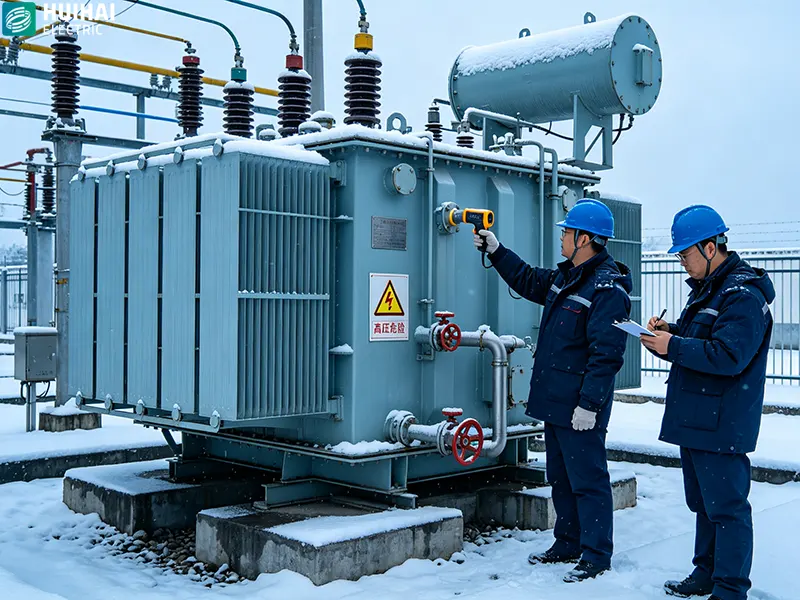
1. Oil Temperature and Level Control
Specific Standard Data for Oil Temperature and Level Control of Oil-Immersed Transformers in Winter
1.1. Oil Level Standard Data
- Ambient temperature -10oC-0oC: Oil level at 1/4-1/2 mark.
- Ambient temperature 0oC-10oC: Oil level at 1/2-2/3 mark.
- Strictly prohibited from falling below the minimum oil level line or exceeding the maximum oil level line
- Oil level below the standard lower limit: Considered oil shortage, immediately add transformer oil of the same grade.
- Sudden and significant drop in oil level due to a sudden drop in temperature: Indicates oil leakage, immediately shut off power and check for leaks.
1.2. Top Oil Temperature Standard Data
- Maximum allowable long-term top oil temperature: 95oC.
- Recommended daily operation control value: 70-85oC is advisable, and should not exceed 80oC in winter.
- Temperature alarm: 85oC.
- High temperature trip: 95oC.
- Ambient temperature -20oC and below: Top layer oil temperature should not be lower than 20oC to prevent excessive oil viscosity and poor circulation.
- Re-operation after long-term no-load shutdown: Do not immediately apply full load if oil temperature is below 10oC; gradually increase load to warm up.
1.3. Winding Temperature Standard Data
- Maximum allowable long-term winding temperature: 105oC.
- Normal operation control in winter: ≤90oC.
- Warning if winding temperature >95oC; immediately reduce load when approaching 105oC.
1.4. Oil Viscosity and Low-Temperature Grade Control
- 25 Transformer Oil: Applicable minimum ambient temperature -25oC.
- 45 Transformer Oil: Applicable minimum ambient temperature -45oC In winter, it is strictly forbidden to use oil with a grade higher than the local minimum temperature to prevent low-temperature solidification and heat dissipation failure.
1.5. Winter Inspection and Control Mandatory Data
- Measure temperature and oil level twice daily, morning and evening. Increase special inspections if the temperature drops sharply (single-day temperature drop ≥10oC).
- Normal range for oil temperature difference between oil and ambient temperature: 30-50oC. Excessive temperature difference indicates overload or poor heat dissipation.
2. Insulating Oil Maintenance
Complete set of key data standards for insulating oil maintenance of oil-immersed transformers in winter.
2.1. Breakdown Voltage (Withstand Voltage Value)
- New oil before commissioning: ≥40 kV.
- Transformer oil in operation (35kV and above): ≥35 kV.
- 10kV distribution transformer in operation: ≥30 kV.
- Below standard: Oil filtration, vacuum degassing, or oil replacement is required.
2.2. Moisture Content (Slight Water Content)
- New oil/Recycled oil: ≤20 mg/L.
- Normal standard in operation: ≤35 mg/L.
- Stricter control in cold winter regions: ≤25 mg/L.
- >40 mg/L: Insulation is damp; immediate dehydration and filtration are necessary.
2.3. Dielectric Loss Factor (90oC)
- New oil: ≤0.5%.
- Qualified in operation: ≤2.0%.
- Exceeding the standard in winter is mostly due to oil aging, dampness, or impurities.
2.4. Acid Value
- Qualified value: ≤0.03 mgKOH/g.
- >0.05 mgKOH/g: Oil aging accelerates, regeneration or replacement required.
2.5. Breathing Apparatus Silica Gel Maintenance Data
- Silica gel discoloration ≥2/3: Must be replaced/dried and regenerated.
- Normally dry silica gel: blue/orange; saturated with moisture: pink/colorless.
- In winter, inspect at least once a month; in rainy, snowy, or foggy weather, inspect every 3-5 days.
3. Bushing and External Insulation Protection
- Clean dust, oil, frost, and ice from the surfaces of high and low voltage bushings and insulators to prevent flashover and creepage tripping in winter.
- Inspect bushings for cracks, damage, and oil leaks; check terminal blocks for looseness, overheating, and oxidation discoloration. Winter contraction can easily cause loosening of joints.
- In rainy, snowy, or freezing weather, promptly remove ice from bushings and leads to prevent ice flashover accidents.
4. Cooling System Inspection and Maintenance
- For air-cooled and self-cooled transformers, check the heat sinks and cooling pipes for blockages, freeze-thaw cracks, and ice buildup.
- Test run the fan and oil pump, checking for abnormal noises and bearing jamming. In winter, prevent motor grease from solidifying and causing jamming.
- In severe cold weather, shut down the standby cooler, ensure proper anti-freezing and insulation, and completely drain any water from the pipes to prevent freezing and cracking.
5. Wiring and Grounding System
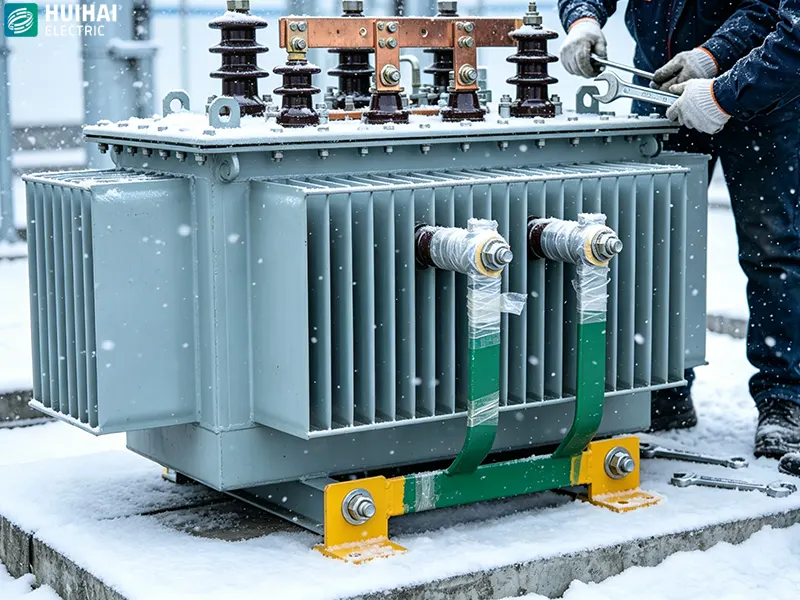
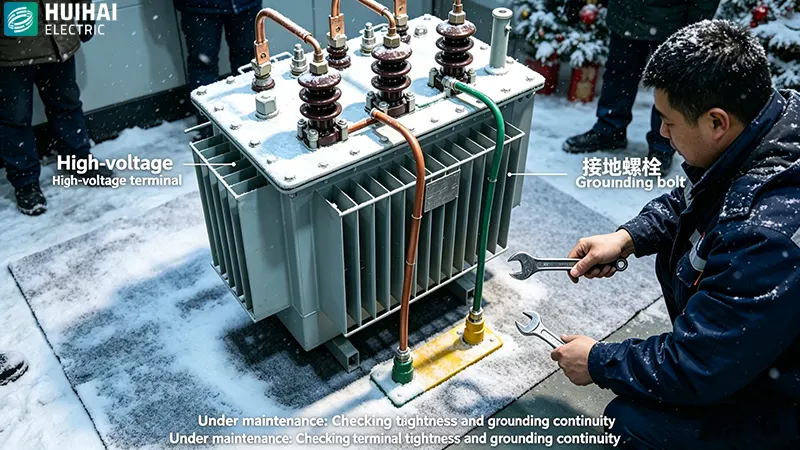
- Inspect high and low voltage leads, busbar joints, and cable terminals, tighten bolts, and eliminate potential overheating hazards due to poor contact.
- Thoroughly inspect the transformer casing grounding, neutral point grounding, and lightning protection grounding leads for integrity, absence of breaks and rust, and acceptable grounding resistance.
- Apply rust and corrosion protection treatment to the grounding flat iron and joints, as frozen soil in winter can easily lead to poor grounding contact.
6. Anti-freezing and Leakage Prevention of Transformer Tank and Accessories
- Inspect the transformer oil tank, valves, drain plugs, and sealing gaskets. Low temperatures cause rubber to age and harden; identify and seal any oil leaks promptly.
- Insulate and protect the outdoor transformer foundation, valves, and pipelines from freezing. Ensure proper drainage in low-lying areas to prevent water accumulation and freezing, which could crack the equipment.
- Ensure explosion-proof pipes and pressure relief valves are intact, free of snow and ice, and operate reliably in case of malfunction.
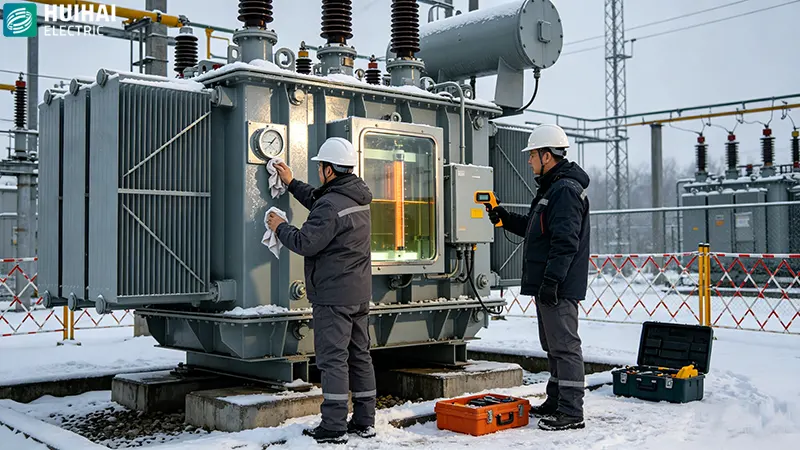
7. Load and Operation Mode Management
- Manage winter loads appropriately to avoid prolonged overload operation. While short-term overload is permissible at low temperatures, strict control of time and temperature rise is necessary.
- Increase the frequency of special inspections during nighttime low temperatures and early morning temperature fluctuations, focusing on monitoring transformer operating sounds for abnormal noises or impacts.
- Regularly rotate and put standby transformers into operation to prevent prolonged shutdowns that could lead to moisture accumulation and oil sedimentation.
8. Moisture and Condensation Prevention Measures
- Keep indoor transformer distribution rooms well-ventilated, dry, and airtight to prevent condensation caused by large temperature differences between day and night.
- Install dehumidifiers and heating devices to maintain standard indoor temperature and humidity in winter, preventing moisture damage to the core and windings and reducing insulation.
- When transformers are out of service, ensure proper sealing to prevent cold air and moisture from entering the transformer body.
Winter maintenance of oil-immersed transformers is a crucial aspect of ensuring the safe operation of the power grid during winter. The core focus is on strictly controlling low temperatures, preventing moisture, preventing freezing, and preventing leakage. Each maintenance team must strictly implement these measures, refine inspection procedures, standardize operating procedures, and regularly conduct comprehensive inspections and rectification of potential hazards to ensure early detection, early handling, and early prevention. Simultaneously, adjust maintenance frequency and focus flexibly based on the actual operating conditions of the equipment and local winter climate differences to ensure stable, safe, and efficient operation of the transformer in low-temperature winter environments, providing reliable support for various electricity needs.
Written by
Huihai Electric Co., Ltd.
Editor Xu
www.huihai-electric.com
WhatsApp:+86 139 1136 0187
Email:13705388456@163.com
HUIHAIElectric
Huihai Electric is a leading manufacturer of smart grid equipment in China.