Huihai
Electric
The 9 Key Roles of Dry-Type Transformers in Modern Smart Grid Infrastructure Construction
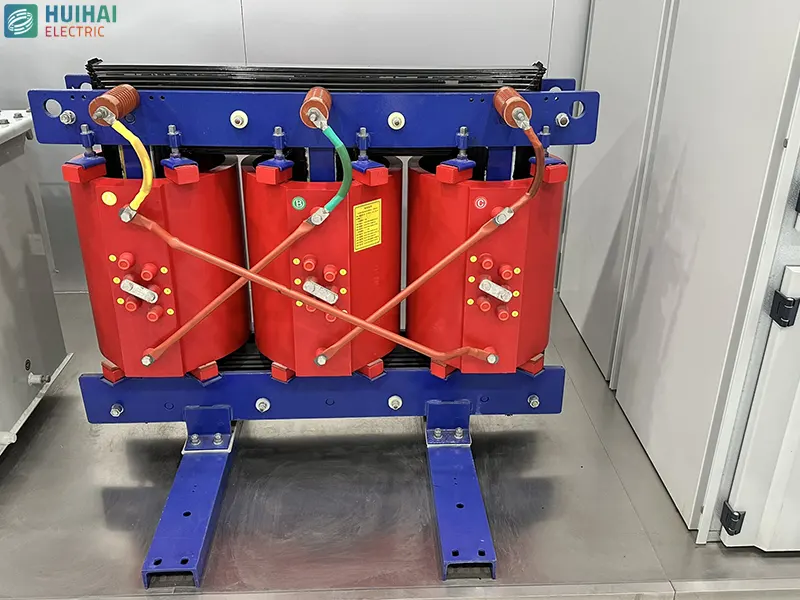
The global power sector is racing to build smarter, more resilient, and more sustainable electricity networks. At the core of this transformation lies a humble yet increasingly sophisticated device: the dry-type transformer. Unlike traditional oil-filled units, dry-type transformers use air or cast resin as insulation, making them safer, greener, and far more compatible with the digital demands of tomorrow’s grid.
But what exactly do they do? Beyond simply stepping voltage up or down, dry-type transformers now perform a host of functions that are essential for modern smart grid infrastructure. Here are the nine key roles they play.
1. Ensuring Superior Fire Safety in Urban and Indoor Environments
One of the most immediate advantages of dry-type transformers is their inherent fire safety. With no flammable mineral oil, they eliminate the risk of oil fires or explosions – a critical factor for installations inside buildings, underground substations, and densely populated city centres.
- Why it matters: Urban grids are expanding rapidly, with more substations placed inside commercial towers, hospitals, and data centres. Dry-type designs comply with strict fire codes (e.g., IEEE C57.12.01, IEC 60076-11) and reduce insurance liabilities.
- Smart grid context: As utilities deploy more distributed energy resources (DERs) in urban areas, the need for fire-safe, compact transformer solutions becomes non-negotiable.
2. Delivering Environmental Friendliness and Compliance
Dry-type transformers are oil-free, meaning zero risk of soil or groundwater contamination from leaks or spills. This is increasingly important as environmental regulations tighten worldwide.
- Sustainability angle: They support green building certifications (LEED, BREEAM) and help utilities meet ESG (Environmental, Social, and Governance) targets.
- Lifecycle advantage: No oil handling, no disposal costs, and a fully recyclable core and coil make them a cleaner choice over the entire asset life.
3. Reducing Maintenance Burdens and Lifecycle Costs
Because they do not require oil testing, filtration, or periodic replacement, dry-type transformers dramatically cut operational and maintenance (O&M) expenses.
- Smart maintenance: The absence of oil-related wear means fewer scheduled interventions. Utilities can redirect O&M budgets toward grid automation and digital monitoring instead.
- Total cost of ownership: Although the initial capital cost may be slightly higher than oil-filled types, the lower maintenance and longer service life often result in a lower TCO over 25-30 years.
4. Enabling Space-Saving, Compact Substation Designs
Modern cities and industrial plants face severe space constraints. Dry-type transformers, especially cast-resin units, are significantly more compact than oil-filled equivalents at the same voltage rating.
- Urban applications: They fit easily into prefabricated compact substations, allowing utilities to deploy power close to load centres without acquiring large land parcels.
- Indoor compatibility: Their small footprint and fire-resistant enclosure make them ideal for high-rise buildings, underground malls, and railway tunnels.
5. Supporting Real-Time Condition Monitoring
The smart grid is built on data. Modern dry-type transformers come equipped with embedded sensors that continuously measure key parameters:
- Winding and core temperatures
- Load current and voltage
- Partial discharge activity
- Ambient humidity and vibration
This real-time data feeds into central SCADA or cloud-based asset management platforms, giving operators unprecedented visibility into transformer health.
6. Enabling Predictive Maintenance with AI Analytics
Data alone is not enough – it must be converted into actionable intelligence. By applying machine learning algorithms to the monitoring data, dry-type transformers become predictive assets.
- Failure forecasting: Algorithms can detect subtle changes in temperature rise or partial discharge patterns, predicting failures weeks or months in advance.
- Reduced downtime: Predictive maintenance allows utilities to schedule repairs during planned outages, avoiding costly unplanned blackouts and extending transformer lifespan.
Studies have shown that AI-based diagnostic systems can achieve accuracy rates above 91% for fault detection in dry-type transformers.
7. Facilitating Smart Grid Communication and Load Coordination
Today’s dry-type transformers are not passive devices – they are active nodes in the grid communication network. They can exchange data with:
- Grid control centres (for load balancing)
- Distributed generation controllers (solar, wind, storage)
- EV charging management systems
This two-way communication enables dynamic voltage regulation, reactive power support, and seamless integration of intermittent renewables – all essential for a flexible, decentralised smart grid.
8. Serving a Wide Range of Application Scenarios
The versatility of dry-type transformers makes them the preferred choice across virtually every sector of the modern economy:
- Data centres – critical power with zero fire risk
- Hospitals – high reliability and low noise
- Railways and metros – compact, vibration-resistant designs
- EV charging hubs – ability to handle fluctuating loads
- Renewable plants – compatibility with inverter outputs
- Industrial factories – robust performance in dusty or humid environments
This broad applicability ensures that dry-type transformers are a standard building block for all kinds of smart infrastructure projects.
9. Supporting Renewable Energy Integration and Grid Stability
Perhaps the most forward-looking role is their contribution to high-penetration renewable grids. Solar farms, wind parks, and battery storage systems produce variable, sometimes erratic, power.
- Handling fluctuations: Dry-type transformers are designed to withstand frequent load cycling and voltage sags without degradation – unlike oil-filled units which may suffer accelerated ageing under such conditions.
- Harmonic mitigation: Many modern dry-type units are paired with active filtering to manage harmonic distortion from inverters, ensuring clean power injection into the grid.
- Grid-forming capability: In microgrids, they can work alongside power electronics to help stabilise frequency and voltage, becoming active participants in grid resilience.
Conclusion: Dry-Type Transformers – The Smart Grid’s Indispensable Asset
From fire-safe indoor installations to AI-powered predictive maintenance, dry-type transformers have evolved far beyond their traditional role. They are now multifunctional enablers of the smart grid – delivering safety, sustainability, intelligence, and flexibility in one compact package.
As utilities, industrial operators, and renewable developers plan their infrastructure for the coming decade, choosing the right dry-type transformer is not just a technical decision – it is a strategic investment in grid resilience and operational excellence.
Partner with Huihai Electric
At Huihai Electric, we manufacture a comprehensive range of dry-type transformers engineered for the demands of modern smart grids. Our units feature:
- Cast-resin or vacuum-impregnated designs for maximum durability
- Integrated sensor ports for easy monitoring upgrades
- Compliance with IEC, IEEE, and GB standards
- Customised ratings from 100 kVA to 20 MVA and voltage classes up to 36 kV
Whether you are upgrading an urban substation, building a solar farm, or equipping a new data centre, Huihai Electric offers reliable, high-performance dry-type transformer solutions backed by decades of experience.
Written by
Huihai Electric Co., Ltd.
Editor Xu
www.huihai-electric.com
WhatsApp:+86 139 1136 0187
Email:info@huihai-electric.com
- Dry-Type Transformers: The Backbone of Modern Smart Grid Infrastructure
- Basic Winter Maintenance Measures for Oil-Immersed Transformers
- The 8 Key Roles of Temperature and Humidity Controllers in High and Low Voltage Switchgear
- The 9 Core Roles of Huihai Electric Prefabricated Substations in Photovoltaic Power Generation Systems
HUIHAIElectric
Huihai Electric is a leading manufacturer of smart grid equipment in China.